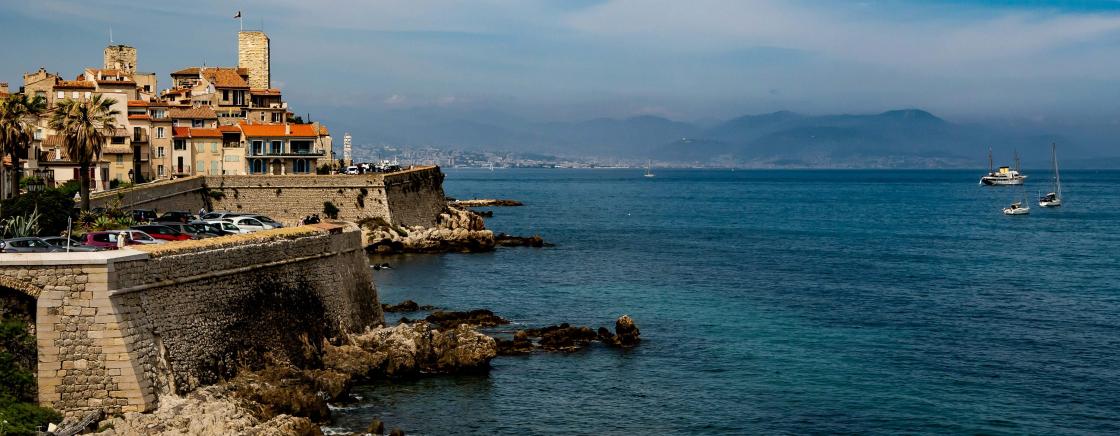
Antibes, a city of borders and passages
From Greek and then Roman times, Antibes occupied a strategic position along the coast. During the Middle Ages, the city became a fortified stronghold, protected by ramparts that are still visible today. Long a border town between the Kingdom of France and the County of Nice, Antibes saw sailors, merchants and soldiers pass through, leaving behind a dense and defensive architecture characteristic of the Old Town.
To wander through its narrow streets is to follow the traces of this history: tight passageways, ancient stones, quiet squares and timeworn façades all bear witness to a past that remains very much alive.

Port Vauban, the city’s maritime memory
Just a short walk from the historic center lies Port Vauban, one of the oldest ports in the Mediterranean. Used since Antiquity, it long served as a vital hub for maritime trade and navigation.
Today, Port Vauban embodies a dialogue between history and modernity: traditional sailing boats sit alongside contemporary yachts, reminding visitors that the sea remains at the very heart of Antibes’ identity. From the quays, views stretch across the ramparts and out to the open sea, offering a unique perspective on the city.
The Château Grimaldi and Picasso’s legacy
Overlooking the sea, the Château Grimaldi is one of the Old Town’s most emblematic landmarks. Once a residence of the Grimaldi family, it now houses the Picasso Museum.
In 1946, Pablo Picasso stayed there and created numerous works, deeply inspired by the Mediterranean light and surroundings. This moment marked a turning point: the château became the first museum in the world dedicated to the artist. Blending art and heritage, the Picasso Museum symbolises the intimate link between Antibes, creativity and the cultural history of the region.

A living heritage
The Old Town of Antibes is not a frozen setting. Its history continues to live on through its residents, markets, cultural venues and constant relationship with the sea. Exploring this district means understanding Antibes at its deepest level: a city of memory, movement and light.
Much like Villa Miraé, the Old Town invites a thoughtful and unhurried discovery, where history reveals itself to those willing to take the time to listen.